Author: zoya khan

  • Other Ways to Say I Wish You the Best for Every Situation

    Other Ways to Say I Wish You the Best for Every Situation

    Other Ways to Say I Wish You the Best for Every Situation

    “I wish you the best” is a kind farewell, but it can feel generic when someone is starting a new job, graduating, or moving away. Alternatives like “Wishing you every success”, “All the best in your next chapter”, and “Here is to everything great coming your way” carry the same warmth with far more personality.

    This guide gives you other ways to say I wish you the best for work farewells, friends and family, casual goodbyes, and life’s big moments, each with its meaning and an example, plus a quick table to pick the right phrase fast.

    In this guide

    1. Work and farewell messages
    2. Friends and family wishes
    3. Funny and casual wishes
    4. Wishes for big life moments
    5. Which phrase fits the moment
    6. Frequently Asked Questions

    Work and farewell messages

    • 1. Wishing you continued success, The polished professional standard for farewell emails, especially when someone is moving to a new role.
      Wishing you continued success in your new role, you will be missed here.
    • 2. Best wishes for your future endeavours, Formal and timeless, ideal for official letters and company-wide farewells.
      Best wishes for your future endeavours, and thank you for everything.
    • 3. Wishing you success in your next chapter, Warm but professional, framing a departure as a story continuing rather than ending.
      Wishing you success in your next chapter, it is going to be a good one.
    • 4. I hope everything goes well for you moving forward, Sincere and slightly personal, good for a colleague you know well.
      I hope everything goes well for you moving forward, and let us stay in touch.
    • 5. Here is to your future achievements, Celebratory without being casual, perfect for a leaving card or a toast.
      Here is to your future achievements, may they be even bigger than these.

    Friends and family wishes

    • 1. All the best, always, Simple, warm, and endlessly reusable for texts, cards, and sign-offs to people you love.
      All the best, always, you know where to find me.
    • 2. Wishing you all the happiness and success, Doubles the wish, covering both joy and achievement in one heartfelt line.
      Wishing you all the happiness and success in your new home.
    • 3. Sending you my best wishes, Gentle and caring, ideal when you cannot be there in person for the big day.
      Sending you my best wishes from miles away, I am cheering you on.
    • 4. May success and happiness follow you always, A slightly poetic wish that suits cards, letters, and milestone messages.
      May success and happiness follow you always, wherever life takes you.
    • 5. I wish you well, today and always, Extends the wish beyond one moment, promising goodwill that does not expire.
      I wish you well, today and always, that never changes.

    Funny and casual wishes

    • 1. Best of luck, you have got this, Casual confidence that works for friends heading into exams, auditions, or first days.
      Best of luck, you have got this, and you know it.
    • 2. Knock it out of the park, Playful hype for friends who prefer encouragement with energy rather than sentiment.
      Knock it out of the park, I will be bragging about knowing you.
    • 3. Onward and upward, Short, stylish, and optimistic, perfect for texts and social media farewells.
      Onward and upward, bigger things are already waiting.
    • 4. Go get them, Two words of pure encouragement, best for close friends who need a push, not a speech.
      Go get them, and call me with every detail after.
    • 5. Here is to everything great coming your way, Celebratory and a little cheeky, ideal for promotions and new adventures.
      Here is to everything great coming your way, you have earned all of it.

    Wishes for big life moments

    • 1. May your next chapter be your best one yet, Made for retirements, graduations, and fresh starts, where the future matters most.
      May your next chapter be your best one yet, you have earned the good part.
    • 2. Wishing you a lifetime of happiness, The classic wedding wish, warm enough for anniversaries and engagements too.
      Wishing you a lifetime of happiness together, starting today.
    • 3. I wish you every success in your journey, Formal enough for mentors and teachers, heartfelt enough for family.
      I wish you every success in your journey, wherever it leads.
    • 4. Good luck with whatever comes next, Honest and open-ended, perfect when you do not know exactly what someone is heading into.
      Good luck with whatever comes next, I know you will make it yours.
    • 5. May all your dreams come true, The biggest, warmest wish of all, best saved for milestones that deserve it.
      May all your dreams come true, starting with this one.

    Which phrase fits the moment

    SituationBest phraseTone
    Colleague leaving the companyWishing you continued successProfessional and polished
    Friend moving to a new cityAll the best, alwaysWarm and personal
    Graduation or retirementMay your next chapter be your best one yetHeartfelt and forward-looking
    Wedding or engagementWishing you a lifetime of happinessClassic and romantic
    Casual text before a big dayBest of luck, you have got thisCasual and confident

    Frequently Asked Questions

    Is I wish you the best too informal for a professional email?

    No, it is acceptable in most workplaces, but for very formal farewells, “Best wishes for your future endeavours” or “Wishing you continued success” sounds more polished.

    What is the most heartfelt way to say I wish you the best?

    Add a personal detail to a warm phrase: “May your next chapter be your best one yet, I will miss our Friday coffee chats” turns a generic wish into a real memory.

    Can I say wish you all the best in a business email?

    Yes, “wish you all the best” is widely accepted in business emails and reads as both warm and professional, especially as a sign-off to a departing colleague.

    What should I write in a farewell card instead of I wish you the best?

    Try “Here is to your future achievements” or “Wishing you success in your next chapter”, then add one sentence about the person so the card feels written, not copied.

    What is a short alternative to I wish you the best?

    “All the best” is the shortest classic alternative, while “Onward and upward” is the trendiest short option for texts and social media.

    A good wish names the future you hope for, not just the goodbye you are saying.

    Final Thoughts

    Other ways to say I wish you the best all share one rule: match the phrase to the relationship and add one personal detail. Formal wishes for work, warm wishes for family, and a little hype for friends will always beat the same generic line. GrammarHeist lists thirty alternatives with examples for formal, casual, and heartfelt tones. For more everyday phrases, see the how to address an envelope guide, the naughty or nice list guide, or the smash or pass explainer.

  • Other Ways to Say I Believe in You With Meaning and Examples

    Other Ways to Say I Believe in You With Meaning and Examples

    Other Ways to Say I Believe in You With Meaning and Examples

    “I believe in you” is powerful, but repeating it can start to sound automatic. Varying your words, “You have got this”, “I have faith in your abilities”, “I am rooting for you”, keeps encouragement fresh, personal, and matched to the moment.

    This guide gives you other ways to say I believe in you for work, family, friends, and big moments, each with its meaning and a real example, plus a quick table to help you pick the right phrase in seconds.

    In this guide

    1. Work and professional encouragement
    2. Friends and family encouragement
    3. Funny and casual encouragement
    4. Encouragement before big moments
    5. Which phrase fits the moment
    6. Frequently Asked Questions

    Work and professional encouragement

    • 1. I have full confidence in your abilities, A formal, steady vote of trust that suits managers, mentors, and colleagues before a presentation or project.
      I have full confidence in your abilities to lead this launch.
    • 2. You have my full support, Promises backing, not just belief, which matters when someone needs help as well as praise.
      You have my full support on this proposal, tell me what you need.
    • 3. I trust your judgment, Shows you respect their decisions, not just their effort, which is ideal before a difficult call.
      I trust your judgment on the timeline; go with what you think is right.
    • 4. You are more than capable of this, Gently corrects self-doubt by pointing at proven skill, without sounding like a pep talk.
      You are more than capable of this, you handled the last rollout brilliantly.
    • 5. I know you will handle this well, Calm and certain, perfect for emails and messages where warmth must stay professional.
      I know you will handle this well, and I am here if anything comes up.

    Friends and family encouragement

    • 1. I have faith in you, A warmer, deeper version of belief, best for close relationships and moments of real doubt.
      I have faith in you, even on the days you do not have faith in yourself.
    • 2. You have got this, Short, punchy, and modern, the go-to text before an exam, interview, or first day.
      You have got this, text me the minute it is over.
    • 3. I am rooting for you, Says you are cheering from the sidelines, ideal when you cannot be there in person.
      I am rooting for you from home, loudly, probably too loudly.
    • 4. You are stronger than you know, Speaks to inner strength, which fits hard times better than praise for a single task.
      You are stronger than you know, and this week will prove it.
    • 5. I am here for you, always, Combines belief with presence, reassuring someone who feels alone with a challenge.
      I am here for you, always, win, lose, or somewhere in between.

    Funny and casual encouragement

    • 1. Go crush it, Playful and energetic, perfect for friends who respond better to hype than to sincerity.
      Go crush it, and save me a front-row seat for the victory lap.
    • 2. Knock it out of the park, A sporting idiom that turns encouragement into a fun, confident send-off.
      Knock it out of the park, champ, the audience is already on your side.
    • 3. You were born for this, Delightfully over-the-top, best used with a wink among close friends.
      You were born for this, the rest of us are just extras in your movie.
    • 4. Show them what you have got, Turns nerves into a performance, great before auditions, games, and pitches.
      Show them what you have got, they have no idea what is coming.
    • 5. No doubt in my mind, Casual certainty that lands like a high five in words.
      No doubt in my mind, you are walking out of there with the win.

    Encouragement before big moments

    • 1. You are going to do amazing things, Looks past one event to a whole future, ideal for graduations and new chapters.
      You are going to do amazing things, and this is only the first page.
    • 2. Your hard work is about to pay off, Rewards the effort behind the moment, not just the talent, which feels earned and sincere.
      Your hard work is about to pay off, every late night led to this.
    • 3. You are on the right track, Reassures someone mid-journey that their direction is sound, even if the destination is far off.
      You are on the right track, so keep going exactly as you are.
    • 4. I believe in your vision, Backs someone’s idea, not just their ability, which matters for founders, artists, and dreamers.
      I believe in your vision, and I cannot wait to see it built.
    • 5. Your potential is limitless, A big, heartfelt line for milestones like graduations, weddings, and career changes.
      Your potential is limitless, today is just the starting line.

    Which phrase fits the moment

    SituationBest phraseTone
    Work presentation or projectI have full confidence in your abilitiesProfessional and steady
    Friend before an examYou have got thisShort and encouraging
    Family member facing a hard timeYou are stronger than you knowWarm and deep
    Cheering from a distanceI am rooting for youFriendly and supportive
    Graduation or new chapterYou are going to do amazing thingsHeartfelt and forward-looking

    Frequently Asked Questions

    What is the best alternative to I believe in you?

    For most situations, “You have got this” is the best all-rounder: short, warm, and confident. For formal settings, use “I have full confidence in your abilities” instead.

    Is it professional to say I believe in you at work?

    Yes, especially from a manager to a team member, but formal versions like “I trust your judgment” or “You have my full support” usually land better in professional emails.

    How do I encourage someone without adding pressure?

    Pair belief with support and an easy exit: “I know you can do it, and I am here whatever happens” encourages without making the outcome feel like a test of your faith.

    What can I say instead of I believe in you in a text?

    Try “You have got this”, “Rooting for you”, or “Go crush it” for texts. They are short enough for a message and warm enough to feel personal.

    What is a heartfelt way to say I believe in you?

    “I have faith in you, even on the days you do not have faith in yourself” is one of the most heartfelt versions, because it promises belief that does not depend on their mood.

    Belief sounds best when it is specific, name the strength, not just the feeling.

    Final Thoughts

    Other ways to say I believe in you work best when they match the person and the moment: formal confidence at work, warm faith at home, and a little hype among friends. Vary the phrase, add one specific reason you believe, and your encouragement will land like it is meant. Other Ways To Say lists more alternatives with examples for different situations. For more everyday phrases, see the how to address an envelope guide, the naughty or nice list guide, or the trunk or treat guide.

  • Incase or In Case: Key Differences You Must Know

    Incase or In Case: Key Differences You Must Know

    Incase or In Case: Key Differences You Must Know

    In case is always two words when it means “if something happens” or “as a precaution”, while incase is a misspelling in standard English. The confusion is understandable, the phrase sounds like one word when spoken quickly, but in writing, the space matters.

    This guide gives you the quick answer, shows exactly how in case works in sentences, clears up the encase confusion, and hands you memory tricks so you never type incase again.

    In this guide

    1. Key differences at a glance
    2. The quick answer: two words, always
    3. How in case works in sentences
    4. Incase vs encase: a different word entirely
    5. Mistakes and memory tricks
    6. Frequently Asked Questions

    Key differences at a glance

    FormCorrect?MeaningExample
    in caseYes, alwaysIf something happens; as a precautionBring a jacket in case it rains.
    incaseNoNothing in standard English (a misspelling)Never use it for “in case”.
    encaseYes, different wordTo enclose or cover completelyEncase the phone in a protective cover.
    just in caseYesSame as in case, with extra emphasisTake an umbrella just in case.
    in-case (hyphenated)NoNot a standard formWrite “in case” with a space, no hyphen.

    The quick answer: two words, always

    • 1. In case means “if” plus preparation, You do something now so you are ready if a possible event happens later.
      I saved the file in case my laptop crashed.
    • 2. Incase is not a word in standard English, Dictionaries and style guides do not list incase as a spelling of the phrase, so spellcheckers will flag it.
      Typing “incase it rains” is a typo, however natural it feels.
    • 3. The space is the whole difference, Unlike indeed or insofar, which really are one word, in case never merged into a single word.
      Knowing that one fact fixes the mistake permanently.
    • 4. Just in case follows the same rule, Adding “just” for emphasis does not change the spelling: it is still “just in case”, never “just incase”.
      Pack a spare charger just in case your phone dies.
    • 5. The one exception is a brand name, Incase is a company that makes laptop cases, so the one-word form is only correct as that proper noun.
      An Incase laptop sleeve is a product, not a grammar lesson.

    How in case works in sentences

    • 1. In case plus a clause, Follow in case with a full clause describing the possible event you are preparing for.
      Leave early in case there is traffic on the motorway.
    • 2. In case of plus a noun, For signs and instructions, use “in case of” before a noun or noun phrase, not a clause.
      In case of fire, use the stairs and do not use the lift.
    • 3. In case at the end of a sentence, The phrase can stand alone at the end, with the possible event understood from context.
      I do not think I will need cash, but I will bring some in case.
    • 4. In case is about preparation, not just condition, Use “if” for a plain condition about the future, and “in case” when an action is taken now to prepare.
      I will go to the cinema if I have time, but I bought snacks in case I go.
    • 5. In case works in questions and requests too, It fits naturally in polite requests, reminders, and safety notes.
      Please call me in case you get lost on the way here.

    Incase vs encase: a different word entirely

    • 1. Encase means to enclose or cover, To encase something is to surround it completely, usually for protection or display.
      The jeweller encased the diamond in a velvet box.
    • 2. Encase starts with E, like enclose, That shared first letter is the easiest way to remember which spelling means “to wrap”.
      Encase and enclose both start with E, and both mean to surround.
    • 3. Incase is sometimes a rare old spelling of encase, Historically, incase appeared as a variant of the verb encase, but modern dictionaries recommend encase instead.
      You will almost never need the old incase verb form in modern writing.
    • 4. If you mean “to be safe”, it is never encase, Encase is about physical covering, so it cannot replace the precaution phrase in case.
      Writing “encase it rains” is wrong in the opposite direction.
    • 5. Test it: can you swap in “enclose”?, If “enclose” fits the sentence, you want encase; if “if it happens” fits, you want in case.
      Encase the gift in paper works, but in case it rains needs the two-word phrase.

    Mistakes and memory tricks

    • 1. Remember “in the case of”, In case is short for “in the case of”, which is clearly two words, so the space is built into the meaning.
      In case it rains is really “in the case of rain”, said faster.
    • 2. Watch out for fast typing, The mistake usually comes from typing speed, not ignorance, so slow down on this phrase during proofreading.
      A final search for “incase” in your document catches every slip at once.
    • 3. Do not hyphenate it either, “In-case” is not a standard form, so do not swap the missing space for a hyphen.
      Just in case, with spaces and no hyphen, is the only correct spelling.
    • 4. Teach the pair together, Learners who study in case and encase side by side stop confusing them, because the meanings are so different.
      One prepares for the future, the other wraps something up, two jobs, two spellings.
    • 5. When in doubt, split it, If you see incase in your writing, split it into in case first, then check whether you actually meant encase.
      Splitting first fixes ninety-nine percent of cases on the spot.

    Frequently Asked Questions

    Is incase ever correct?

    Only as the brand name Incase, or as a rare historical spelling of the verb encase. For the phrase meaning “if something happens”, incase is always a misspelling.

    What is the difference between in case and if?

    If states a plain condition about the future, while in case adds preparation: you act now because something might happen later. “I will go if it is sunny” is a condition; “I packed sunscreen in case it is sunny” is preparation.

    When do I use in case of instead of in case?

    Use “in case of” before a noun, as in “in case of emergency”, and “in case” before a clause, as in “in case you need help”. The noun-or-clause test decides every time.

    Is “just incase” correct?

    No. The correct form is always “just in case”, with spaces. “Just” adds emphasis but never joins the words together.

    What does encase mean?

    Encase means to enclose or cover something completely, like encasing a phone in a case or a fossil in glass. Remember it with enclose: both start with E.

    Two words prepare; one word encloses, and incase does neither.

    Final Thoughts

    Incase or in case has a one-line answer: in case is always two words, incase is a misspelling, and encase is a separate verb meaning to enclose. Remember “in the case of” and the space will take care of itself. Quillbot confirms the two-word rule with right and wrong examples. For more everyday language guides, see the how to address an envelope guide, the remove duplicates in Excel tutorial, or the vertical vs horizontal explainer.

  • Spanish or Vanish: The Viral Meaning Behind the Internet Meme

    Spanish or Vanish: The Viral Meaning Behind the Internet Meme

    Spanish or Vanish: The Viral Meaning Behind the Internet Meme

    “Spanish or vanish” is a joke threat from the Duolingo owl: do your Spanish lesson, or disappear. It plays on Duolingo’s famously pushy reminders, turning the green owl Duo into a mock-menacing mascot who punishes anyone who breaks their language-learning streak.

    This guide explains what Spanish or vanish means, where the meme came from, its best variations, and how people use it in captions, comments, and jokes today, plus the 2025 twist that made the owl’s story even stranger.

    In this guide

    1. What Spanish or vanish means
    2. Where the meme came from
    3. Famous variations of the joke
    4. How people use it today
    5. At a glance: the Duolingo threat jokes
    6. Frequently Asked Questions

    What Spanish or vanish means

    • 1. A fake ultimatum from the Duolingo owl, The joke pretends Duo gives learners one choice: practise Spanish, or vanish from existence.
      Miss a lesson and the meme owl is already at your door, tapping its watch.
    • 2. A joke about streak pressure, Duolingo counts consecutive days of learning as a streak, and losing one feels strangely painful, which is exactly what the meme exaggerates.
      Nobody actually vanishes, but every learner knows the guilt of a broken 100-day streak.
    • 3. A shorthand for pushy reminders, People quote it whenever any app, boss, or friend nags them about a habit they skipped.
      Skip the gym once and a friend comments “workout or vanish”, the format works for anything.
    • 4. Spanish is the default because it is Duolingo’s most-learned language, Spanish lessons are the app’s flagship course, so the original threat used Spanish rather than a rarer language.
      Spanish or vanish sounds funnier than a threat about a language nobody studies.
    • 5. It is always a joke, never a real threat, The humour depends on everyone knowing Duo is a cartoon owl and the menace is pretend.
      Used seriously, the line stops being funny, so keep it clearly playful.

    Where the meme came from

    • 1. It started with relentless push notifications, Users noticed Duolingo sent notification after notification when a lesson was missed, and began joking that the owl was watching them.
      One missed lesson could mean three reminders before bedtime, which felt less like encouragement and more like surveillance.
    • 2. The joke exploded around 2019, Memes picturing Duo kidnapping or threatening learners spread across Twitter, Reddit, and Instagram, with “Spanish or vanish” as the signature line.
      By 2019 the threatening owl was one of the internet’s best-known running jokes.
    • 3. Duolingo leaned into the joke on April Fools’ Day 2019, The company released a video for a fake “Duolingo Push” service: a real-life owl that follows you around until you finish your lesson.
      Instead of denying the meme, Duolingo made it official, and the joke got even bigger.
    • 4. The company kept the bit going for years, Duolingo’s social media accounts answered fans in character, posted threatening jokes, and built whole storylines around Duo’s obsessive love of streaks.
      Fans would ask Duo to release their “kidnapped” families after finishing a lesson, and Duo would reply no.
    • 5. The owl “died” in 2025, then came back, In February 2025 Duolingo announced Duo had died, hit by a Tesla Cybertruck, sparking a wave of mourning memes before the mascot’s eventual return.
      The stunt proved the meme’s power: even a fake owl death became global news.

    Famous variations of the joke

    • 1. French or the trench, The rhyming French version, threatening learners with a ditch instead of disappearance.
      Miss your French lesson and Duo is already digging, or so the meme claims.
    • 2. Japanese or broken bones, A darker rhyme that swaps vanishing for a more physical (and still pretend) punishment.
      The joke works because the rhyme lands before you have time to question it.
    • 3. Korean or never be seen, Another rhyming variant that keeps the vanishing theme but changes the language.
      Every language gets its own threat, which is why the format never gets old.
    • 4. Thai or die, The shortest, bluntest version of the joke, popular in lists of Duo’s threats.
      Two words of menace, one rhyme, and the whole joke is done.
    • 5. Your language, your threat, Fans now invent their own versions for any course, from “German or the sermon” to “Italian or the battalion”.
      The template is simple: language plus a rhyming doom, delivered with total owl confidence.

    How people use it today

    • 1. As a caption on study and streak posts, Learners post screenshots of their streaks with “Spanish or vanish” as the caption, joking that fear kept them going.
      A 200-day streak screenshot hits harder with the owl’s threat underneath it.
    • 2. As a reply to missed-lesson confessions, Admit you skipped a day online and someone will answer with the meme before you finish typing.
      Confess a broken streak and the comments write themselves.
    • 3. In Duolingo’s own marketing, The brand still uses the threatening-owl persona in videos, songs, and live events, including musical numbers built around the threats.
      Duolingo on Ice even featured songs like “Spanish or Vanish” and “French or the Trench”.
    • 4. As a template for other habits, The format now covers gyms, homework, and chores: “essay or dismay” follows the same joke logic.
      Any skipped habit can get the Duo treatment with one rhyme.
    • 5. Keep it light and opt-in, The joke lands with people who know the meme; with strangers, or about real threats, it can read as odd rather than funny.
      Save the owl threats for fellow learners who will laugh, not for formal messages.

    At a glance: the Duolingo threat jokes

    PhraseLanguageJoke threatWhy it works
    Spanish or vanishSpanishDisappearing entirelyThe original, and the app’s most popular course
    French or the trenchFrenchBeing thrown in a ditchPerfect rhyme, absurd image
    Japanese or broken bonesJapanesePhysical harm (pretend)Escalates the joke’s menace
    Korean or never be seenKoreanVanishing, like SpanishNear-rhyme keeps the format flexible
    Thai or dieThaiThe ultimate doomShortest and bluntest of the set

    Frequently Asked Questions

    What does Spanish or vanish mean?

    It is a Duolingo meme in which the owl mascot Duo jokingly threatens learners: do your Spanish lesson, or vanish. It mocks the app’s pushy streak reminders.

    Is Spanish or vanish a real Duolingo message?

    No, it started as a fan joke about Duo’s reminders, though Duolingo later embraced it in April Fools’ videos, songs, and social media posts in character as the owl.

    When did the Spanish or vanish meme start?

    The threatening-owl jokes spread widely in 2019, helped by Duolingo’s April Fools’ Day 2019 video about a real-life owl that follows learners until they practise.

    Did Duolingo really kill off Duo the owl?

    In February 2025 Duolingo announced Duo had died after being hit by a Tesla Cybertruck, in a marketing stunt that sparked global mourning memes before the owl returned.

    Can I use Spanish or vanish in a caption?

    Yes, it works best on streak screenshots, study posts, and jokes among fellow learners who know the meme. Keep it playful and avoid using it as a real threat.

    Do the lesson, keep the streak, and the owl stays friendly.

    Final Thoughts

    Spanish or vanish endures because it turns a universal feeling, the guilt of a broken streak, into one perfect joke threat from a cartoon owl. It started as fan humour, Duolingo embraced it, and the format now covers every language and habit under the sun. Tech Times covers how Duolingo turned its aggressive owl into an April Fools’ joke. For more viral explainers, see the English or Spanish meme guide, the smash or pass explainer, or the trunk or treat guide.

  • Colon vs Semicolon: Key Differences Explained Simply in 2026

    Colon vs Semicolon: Key Differences Explained Simply in 2026

    Colon vs Semicolon: Key Differences Explained Simply in 2026

    A colon introduces or spotlights what comes next, while a semicolon links two closely related complete sentences. Mix them up and your sentence still reads, but the relationship between your ideas gets blurry, and in exams, essays, and work emails, that blur costs marks and clarity.

    This guide explains the colon vs semicolon difference in plain English, with a quick-answer table, clear rules for each mark, simple tests to tell them apart, and the mistakes to stop making. By the end, you will pick the right mark in seconds.

    In this guide

    1. Key differences at a glance
    2. What a colon does
    3. What a semicolon does
    4. How to tell them apart
    5. Common mistakes and quick fixes
    6. Frequently Asked Questions

    Key differences at a glance

    FeatureColon (:)Semicolon (;)
    Main jobIntroduces or spotlights what followsLinks two equal, related sentences
    What must come before itA complete sentenceA complete sentence
    What can follow itA list, word, phrase, or sentenceA complete sentence (or complex list items)
    ExampleShe had one goal: to finish first.She had a big test tomorrow; she stayed home.
    Memory trickThink “spotlight”: here it comesThink “link”: two equal ideas

    What a colon does

    • 1. Introduces a list after a complete sentence, The sentence before the colon must stand on its own, then the list delivers what was promised.
      Pack these three things: a notebook, a pen, and a water bottle.
    • 2. Introduces an explanation or expansion, Use a colon when the second half explains, restates, or proves the first half.
      He had one reason for leaving early: the last train left at nine.
    • 3. Introduces a quotation, A colon can set up a quote, especially after a full introductory sentence.
      The coach kept repeating one line: “Defence wins games.”
    • 4. Marks time, ratios, and titles, Colons are the standard mark in times, ratios, and book or film subtitles.
      The meeting starts at 10:30, and the mix ratio is 2:1.
    • 5. Adds emphasis to a single word or idea, A colon can spotlight one dramatic word at the end of a sentence.
      After months of training, she wanted just one thing: gold.

    What a semicolon does

    • 1. Joins two related complete sentences, Both halves could stand alone as sentences, but the semicolon shows they belong together.
      I have a big test tomorrow; I cannot go out tonight.
    • 2. Works before linking words like however and therefore, Put a semicolon before however, therefore, moreover, or consequently, and a comma after it.
      She loves coffee; however, she avoids caffeine at night.
    • 3. Separates items in a complex list, When list items already contain commas, semicolons keep the boundaries clear.
      We visited Paris, France; Berlin, Germany; and Tokyo, Japan.
    • 4. Acts as a softer, closer full stop, A semicolon pauses longer than a comma but keeps the two thoughts in one sentence.
      The rain stopped; the streets were still shining wet.
    • 5. Never introduces a list, Unlike a colon, a semicolon cannot sit between a sentence and the list it promises.
      Bring the following: pens, paper, and glue, never a semicolon there.

    How to tell them apart

    • 1. Try the full-stop test for semicolons, If you can replace the mark with a full stop and both halves still work as sentences, a semicolon fits.
      She was tired; she kept working becomes two fine sentences, so the semicolon is right.
    • 2. Try the “namely” test for colons, If you can insert “namely” or “that is” after the mark and the sentence still makes sense, a colon fits.
      He brought one thing: namely, his guitar, the colon is doing its spotlight job.
    • 3. Check what comes before the mark, Both marks need a complete sentence before them, so a fragment before either mark is always wrong.
      Because she was late; she ran is wrong on both counts.
    • 4. Check what comes after the mark, A fragment after the mark points to a colon, while a full sentence points to either mark depending on meaning.
      She bought three things: apples, bread, and milk needs a colon, not a semicolon.
    • 5. Ask whether the second half explains the first, Explanation, answer, or list means colon; two equal, related ideas means semicolon.
      There was only one way to win: practise daily is an explanation, so it takes a colon.

    Common mistakes and quick fixes

    • 1. A colon straight after a verb or preposition, Never write “The ingredients include: sugar and flour” because the sentence is unfinished before the colon.
      Fix it as: The ingredients include sugar and flour, or: You need three ingredients: sugar, flour, and eggs.
    • 2. A semicolon before a list, A semicolon cannot introduce items, so “Bring: pens; paper; glue” is wrong twice over.
      Fix it as: Bring pens, paper, and glue, or: Bring three things: pens, paper, and glue.
    • 3. A comma splice fixed with nothing, Two complete sentences joined by only a comma is a comma splice; a semicolon or full stop fixes it.
      Fix “She ran, she missed the bus” as: She ran; she still missed the bus.
    • 4. Capitalising after a semicolon, Never capitalise the word after a semicolon unless it is a proper noun or an acronym.
      Write “We left early; Mondays are quiet” only because Monday is a proper noun.
    • 5. Using a colon where a semicolon belongs, If the second half does not explain or list anything, but simply adds a related thought, use a semicolon.
      Write “The dragon was fearsome; it was nearly undefeatable” rather than forcing a colon in.

    Frequently Asked Questions

    What is the main difference between a colon and a semicolon?

    A colon points forward to a list, explanation, or quotation, while a semicolon links two equal, related complete sentences. Think spotlight for the colon and link for the semicolon.

    Can a colon and a semicolon be used in the same sentence?

    Yes, when each mark does its own job. For example: “She packed three things: a map, a compass, and snacks; she still forgot her keys” uses a colon for the list and a semicolon to join the clauses.

    Do you capitalise the word after a colon?

    Usually no, unless it is a proper noun. Some style guides, such as APA, capitalise a complete sentence after a colon, so follow the style guide your school or publisher uses.

    Can a semicolon replace a full stop?

    Almost always, yes, as long as the two halves are complete, related sentences. If the halves are not closely related, two separate sentences read better than one semicolon sentence.

    Is it wrong to use a colon before a single word?

    No, it is a classic emphasis move. “He wanted one thing: silence” is correct, because the complete sentence before the colon promises something and the word delivers it.

    A colon spotlights; a semicolon links, pick the mark that matches the relationship.

    Final Thoughts

    Colon vs semicolon comes down to one question: are you introducing something, or linking two equals? Introduce with a colon, link with a semicolon, and run the full-stop and namely tests whenever you hesitate. Thesaurus.com explains the same rules with more sentence examples. For more clear comparisons, see the prime or composite guide, the vertical vs horizontal explainer, or the fruit or vegetable guide.

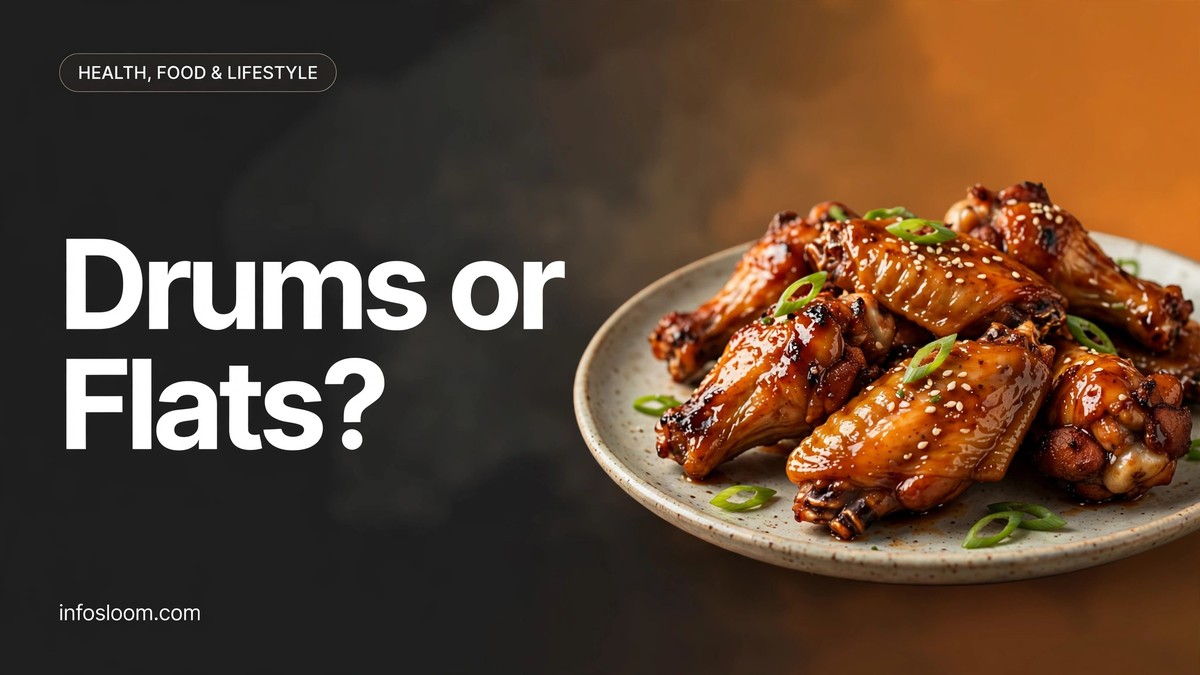
  • Drums or Flats: Which Chicken Wing Is Actually Better?

    Drums or Flats: Which Chicken Wing Is Actually Better?

    Drums or Flats: Which Chicken Wing Is Actually Better?

    Drums or flats is the great chicken wing debate: drums are the meaty, drumstick-shaped pieces with a single bone, while flats are the flatter middle pieces with two thin bones and more crispy skin. Both come from the same wing, yet they eat completely differently.

    This guide explains the anatomy behind each piece, how they compare on meat, skin, sauce, and ease of eating, and which one to order for every situation. By the end, you will know your wing allegiance, and how to defend it.

    In this guide

    1. Drums: the meaty drumettes
    2. Flats: the crispy wingettes
    3. Cooking, sauce, and texture
    4. Which to order, and when
    5. At a glance: drums vs flats
    6. Frequently Asked Questions

    Drums: the meaty drumettes

    • 1. A drum is the wing section nearest the body, Called the drumette, it looks like a miniature drumstick and connects to the chicken’s body by a single bone, the humerus.
      That single central bone is also a built-in handle, which makes drums the easiest wings to hold.
    • 2. Drums are mostly dark meat, The drumette’s thicker muscle is rich in fat and myoglobin, which keeps it juicy even at high cooking temperatures.
      Dark meat forgives overcooking better than white meat, so drums stay tender on the grill.
    • 3. They carry the most meat per piece, A drumette typically weighs about 1.5 to 2 ounces, with roughly 60 percent meat to 40 percent bone and skin.
      If you count bites per wing, drums give you the most food for your money.
    • 4. The meat pulls cleanly off the bone, Because the meat wraps around one central bone, a cooked drum strips cleanly with a single pull.
      Kids and first-time wing eaters usually prefer drums, because there is nothing fiddly about them.
    • 5. Drums are the crowd-pleaser at parties, They disappear first at most gatherings, because they are easy to eat, filling, and hard to mess up.
      Order extra drums for a mixed crowd and you will rarely have leftovers.

    Flats: the crispy wingettes

    • 1. A flat is the middle section of the wing, Called the wingette, it sits between the drumette and the tip, and it is the flatter, oblong piece of the pair.
      Each whole wing gives one drum and one flat, which is why restaurants serve them mixed.
    • 2. Flats have two thin parallel bones, The radius and ulna run the length of the flat, with thinner meat stretched across them.
      Those two bones are the flat’s signature: once you know them, you will spot a flat instantly.
    • 3. Flats win on skin and crispiness, With less meat and more surface area, flats have the best skin-to-meat ratio, so they crisp up beautifully when fried or baked.
      Crunch lovers almost always pick flats, because the skin is the best part of a wing.
    • 4. The meat is a mix of dark and white, The flat’s thinner meat blends dark and white meat, giving a slightly different, chewier texture than a drum.
      That chew is a feature, not a flaw, for fans who like a wing with some bite to it.
    • 5. Flats hold sauce and seasoning best, Their broad, flat surface takes dry rubs and sauces evenly, so every bite carries flavour.
      A dry-rubbed flat tastes seasoned all the way through, not just on the outside.

    Cooking, sauce, and texture

    • 1. Frying favours flats, Deep frying crisps the flat’s large skin surface fastest, which is why fried flats are a cult favourite.
      For maximum crunch, fry flats a minute longer than drums and let them rest on a rack.
    • 2. Grilling favours drums, Drums’ thicker, fattier meat stays juicy over direct heat, where thinner flats can dry out.
      On the grill, move drums to indirect heat to finish, so the outside crisps without burning.
    • 3. Baking works for both, with a tweak, Bake at high heat on a rack, and pull flats a few minutes before drums if they are on the same tray.
      A wire rack is the key: it lets hot air reach the skin on all sides.
    • 4. Saucy wings suit both, differently, Flats carry sauce across a wide surface, while drums hold a thick, sticky coating around their meat.
      Buffalo sauce shines on flats, while thick barbecue glaze clings best to drums.
    • 5. Always cook wings to 165°F inside, Whatever the piece, chicken wings are done when the thickest meat reaches 165°F, measured with a thermometer.
      Colour alone is not a safe guide: check the temperature, especially on thicker drums.

    Which to order, and when

    • 1. Order drums for a hungry crowd, When people want a filling, no-fuss wing, drums deliver the most meat and the easiest eating.
      A game-night order of all drums keeps everyone happy, including picky eaters.
    • 2. Order flats for crunch lovers, When the table cares about crispy skin and bold seasoning, flats are the connoisseur’s pick.
      Wing fans who debate this topic online almost always defend flats on crispiness alone.
    • 3. Order mixed for a first tasting, New to wings? A mixed order lets you compare both pieces side by side before picking a side.
      Most restaurants serve mixed by default, so you have to ask specifically for all drums or all flats.
    • 4. Expect to pay more for all flats, Because each wing yields only one flat, and demand is high, some restaurants charge extra for an all-flats order.
      That surcharge is also proof of the flat’s fanbase: people pay it gladly.
    • 5. The real verdict: there is no wrong answer, Drums win on meat and ease, flats win on skin and sauce, and the best wing is the one cooked well.
      A perfectly cooked flat beats a dried-out drum, and vice versa, every single time.

    At a glance: drums vs flats

    FeatureDrums (drumettes)Flats (wingettes)
    Wing sectionUpper, nearest the bodyMiddle section
    BonesOne (humerus)Two (radius and ulna)
    Meat typeMostly dark meatMix of dark and white
    Meat amountMore, about 60% meatLess, about 40% meat
    Skin and crispinessGoodBest, highest skin ratio
    Ease of eatingEasiest, pulls off one boneTrickier, two bones to work around
    Best cookingGrilling, saucy dishesFrying, baking, dry rubs

    Frequently Asked Questions

    Which chicken wing has more meat, drums or flats?

    Drums have more meat. A drumette is roughly 60 percent meat, while a flat is roughly 40 percent meat, with the rest being skin and bone.

    Which is crispier, drums or flats?

    Flats are crispier. Their flatter shape gives them more skin surface relative to meat, so the skin crisps up better when fried or baked.

    Are drums or flats easier to eat?

    Drums are easier. The meat wraps around a single bone and pulls off cleanly, while flats have two thin bones that take a little more work.

    Can you order all drums or all flats at a restaurant?

    Usually yes, but ask when you order, since most kitchens serve wings mixed by default. Some restaurants charge extra for all flats, because each wing yields only one.

    What temperature should chicken wings reach?

    Chicken wings are safe to eat when the thickest meat reaches 165°F, measured with a food thermometer. This applies to both drums and flats.

    Drums for meat, flats for crunch, and a great cook makes both worth fighting over.

    Final Thoughts

    Drums or flats has no single winner, and that is the point: drums bring more meat, an easy single bone, and juicy dark meat, while flats bring the crispiest skin, the best sauce coverage, and the connoisseur’s crunch. Order mixed to compare, then pick your side, or keep ordering both, like most wing lovers do. Red Table Meats breaks down both wing types with anatomy diagrams. Hungry for more comparisons? Try the fruit or vegetable guide, the kids games collection, or the smash or pass game explainer.

  • Boxers or Briefs: Pros, Cons, and What Men Prefer Today

    Boxers or Briefs: Pros, Cons, and What Men Prefer Today

    Boxers or Briefs: Pros, Cons, and What Men Prefer Today

    Boxers or briefs is a comfort question, not a fashion rule: boxers are loose, breathable, and relaxed, while briefs are snug, supportive, and invisible under slim clothes. Neither is objectively better, the right choice depends on your body, your clothes, and what you are doing that day.

    This guide compares the two styles on comfort, support, breathability, and fit, looks at what surveys say men actually prefer, and introduces the middle ground, boxer briefs, that most men now wear. By the end, you will know which drawer staple suits each part of your life.

    In this guide

    1. Boxers: pros and cons
    2. Briefs: pros and cons
    3. Fit, clothes, and activity: which wins where
    4. What men prefer today, and how to choose
    5. At a glance: boxers vs briefs vs boxer briefs
    6. Frequently Asked Questions

    Boxers: pros and cons

    • 1. Maximum breathability, The loose cut lets air circulate freely, which makes boxers the most comfortable choice in hot weather and at home.
      On a summer day working from home, that airflow is the whole argument for boxers.
    • 2. Relaxed, unrestricted feel, With no snug elastic around the legs, boxers feel like wearing lightweight shorts rather than fitted underwear.
      Men who dislike anything tight around the waist or thighs usually prefer boxers for lounging.
    • 3. Great for sleeping, Loose boxers stay comfortable through the night, without waistbands digging in or fabric twisting.
      Many men wear boxers as sleepwear as well as underwear, which makes them a two-in-one drawer staple.
    • 4. They bunch under slim clothes, Loose fabric folds and rides up under skinny trousers, fitted suits, and gym leggings.
      Visible bunching lines under tailored trousers are the classic boxer drawback.
    • 5. Minimal support for activity, Boxers offer the least structured support, so they suit desk days and weekends better than running or sport.
      For a workout, most men switch to something snugger, even if boxers are their everyday pick.

    Briefs: pros and cons

    • 1. Excellent, all-day support, The snug cut holds everything in place, which is why briefs are a favourite for active days and physical work.
      A well-fitted brief feels the same at 8 a.m. as it does at 8 p.m., with nothing shifting around.
    • 2. Invisible under slim clothes, With no leg fabric, briefs leave no lines under fitted trousers, suits, or shorts.
      For a wedding suit or slim chinos, briefs are the safe, line-free choice.
    • 3. Less fabric, less heat in some ways, Briefs use far less material than boxers, so there is less cloth to bunch, twist, or trap warmth around the thighs.
      Lightweight briefs pack small too, which travellers appreciate.
    • 4. The snug fit is not for everyone, Men who prefer a relaxed feel can find briefs restrictive, especially if the size or waistband is wrong.
      Fit matters more with briefs than with boxers: the right size feels supportive, the wrong size feels tight.
    • 5. Less thigh coverage, Briefs leave the thighs bare, so they offer no fabric barrier for men who prefer coverage there.
      That is exactly the gap boxer briefs were designed to fill.

    Fit, clothes, and activity: which wins where

    • 1. Office and desk days: either works, Under relaxed trousers, boxers breathe better; under slim tailoring, briefs sit cleaner.
      Match the underwear to the trousers, not the other way round.
    • 2. Sport and workouts: briefs win, Support matters when you move, and briefs hold steady where boxers shift and bunch.
      For running, gym sessions, and team sports, a snug style is the practical pick.
    • 3. Hot weather: boxers win, Loose cotton boxers breathe best in summer heat, especially at home or under shorts.
      A breathable cotton boxer is hard to beat on a humid afternoon.
    • 4. Formal wear: briefs win, No leg fabric means no lines and no bunching under a suit or slim trousers.
      Photographers and tailors both prefer a smooth line under formal clothes.
    • 5. Fabric matters as much as style, Cotton breathes, modal feels softer and lighter, and a touch of stretch keeps either style in place longer.
      A good modal brief can feel more comfortable than a cheap cotton boxer, whatever the cut.

    What men prefer today, and how to choose

    • 1. Boxer briefs are now the most popular style, Surveys put boxer briefs at around 40 to 45 percent of men, ahead of both boxers and briefs, because they combine support with thigh coverage.
      The hybrid won by solving both complaints at once: support without bare thighs, coverage without bunching.
    • 2. Boxers still hold about a fifth to a quarter of men, Roughly 20 to 25 percent of men prefer boxers, mainly for comfort and breathability at home.
      Boxers remain the lounging champion, even as they lose the everyday crown.
    • 3. Briefs hold about 15 to 20 percent, Briefs remain popular with men who value support and a clean line under fitted clothes.
      Briefs never left the shelves: they simply share the drawer with newer styles now.
    • 4. One survey found men narrowly preferring boxers over briefs, A 2025 underwear preferences survey found 40.5 percent of men preferring boxers against 35.1 percent preferring briefs.
      Different surveys rank the styles differently, which itself proves the point: there is no universal winner.
    • 5. Own both, and choose by the day, The practical answer is a drawer with boxers for lounging and sleep, briefs or boxer briefs for work, sport, and slim clothes.
      Rotating styles by activity beats forcing one style to do every job.

    At a glance: boxers vs briefs vs boxer briefs

    FeatureBoxersBriefsBoxer briefs
    FitLooseSnugSnug with leg coverage
    SupportLowHighHigh
    BreathabilityHighModerateModerate
    Best forLounging, sleep, heatSport, slim clothesEveryday, all-round wear
    Watch out forBunching under slim clothesLess thigh coverageCan ride up if sized wrong

    Frequently Asked Questions

    Which is more comfortable, boxers or briefs?

    It depends on what you mean by comfort. Boxers feel more relaxed and breathable, especially at home, while briefs feel more secure and stable during activity. Most men find boxer briefs the best everyday compromise.

    Are briefs better for sports than boxers?

    Yes, for most sports. Briefs and boxer briefs hold steady and do not bunch during movement, while loose boxers shift around. For high-impact activity, a snug, supportive style is the practical choice.

    What do most men wear today?

    Boxer briefs are the most popular style, worn by roughly 40 to 45 percent of men, followed by boxers at about 20 to 25 percent and briefs at about 15 to 20 percent, with the rest in other styles.

    Do boxers show under slim trousers?

    They can. Loose boxer fabric bunches and creates visible lines under slim or tailored trousers, which is why briefs or boxer briefs are the better choice for fitted clothes.

    Does fabric matter more than the style?

    Both matter. Style sets the fit and coverage, while fabric sets softness, breathability, and stretch. A well-made modal or cotton-blend pair usually beats a cheap pair in any style.

    Boxers for relaxing, briefs for moving, boxer briefs for everything in between.

    Final Thoughts

    Boxers or briefs is not a contest with one winner: boxers win on breathability and relaxed comfort, briefs win on support and a clean line under slim clothes, and boxer briefs win the everyday middle ground that most men now choose. Stock your drawer for the life you actually live, and let the day’s clothes decide. Nimble Made compares all three styles with fit and fabric guidance. For more everyday comparisons, see the how to stop snoring guide, the sunscreen before or after moisturizer explainer, or the Uber or Lyft cheaper comparison.

  • Quartz or Granite: Which Surface Lasts Longer and Looks Better?

    Quartz or Granite: Which Surface Lasts Longer and Looks Better?

    Quartz or Granite: Which Surface Lasts Longer and Looks Better?

    Quartz or granite is the biggest decision in most kitchen remodels, and the honest answer is that neither wins outright. Quartz is engineered stone that never needs sealing and shrugs off stains, while granite is natural stone that handles heat better and gives you a one-of-a-kind slab.

    This guide compares the two on durability, stains, heat, looks, maintenance, and cost, so you can match the surface to how you actually cook. By the end, you will know which one lasts longer in your kitchen, and which one looks better in it.

    In this guide

    1. What quartz countertops are
    2. What granite countertops are
    3. Durability head-to-head: stains, scratches, and heat
    4. Looks, cost, and how to choose
    5. At a glance: quartz vs granite
    6. Frequently Asked Questions

    What quartz countertops are

    • 1. Quartz is engineered, not quarried, Quartz counters are made from roughly 90 to 95 percent ground natural quartz crystals bound with polymer resins and pigments.
      Because it is manufactured, every slab comes out consistent in colour and pattern.
    • 2. The resin makes it non-porous, With no pores for liquids to seep into, quartz resists stains and bacteria without any sealer at all.
      Red wine, coffee, and turmeric wipe off quartz with soap and water, even hours later.
    • 3. The design range is enormous, Manufacturers can mimic marble, concrete, and colours that never occur in nature, in hundreds of patterns.
      Want a white marble look without marble’s maintenance? Quartz is how most kitchens get it.
    • 4. It is very hard, but not heat-proof, Quartz scores about 7 on the Mohs hardness scale, so it resists scratches well, but its resin binder can discolour above around 300°F.
      Always use a trivet for a pan straight off the burner, even though quartz feels like solid stone.
    • 5. Installed cost runs about $50 to $120 per square foot, Prices vary by brand and pattern, with premium marble-look designs at the top of the range.
      A typical kitchen often lands in the same total range as mid-grade granite.

    What granite countertops are

    • 1. Granite is 100 percent natural stone, It is igneous rock formed over millions of years as magma cooled deep underground, then quarried and cut into slabs.
      Every slab carries its own mineral flecks, veining, and colour depth.
    • 2. No two slabs are ever identical, That uniqueness is granite’s signature appeal, and also its main risk: the slab you see is the slab you get.
      Always view your actual slab in person, not just a sample chip, before approving it.
    • 3. Heat is granite’s superpower, Granite handles hot pans directly, with heat tolerance up to around 1200°F, far beyond anything a kitchen produces.
      A cast-iron pan straight off the burner will not damage sealed granite.
    • 4. It is porous, so sealing matters, Unsealed granite can absorb liquids and stain, which is why it needs resealing roughly every one to two years.
      The water test tells you when: if a drop darkens the stone instead of beading, it is time to reseal.
    • 5. Installed cost runs about $50 to $100 per square foot, Entry-level granite can undercut quartz, while rare colours and exotic patterns climb well above that range.
      Granite’s price spread is wider than quartz’s, because rarity sets the price.

    Durability head-to-head: stains, scratches, and heat

    • 1. Stains: quartz wins clearly, Quartz’s non-porous surface blocks stains entirely, while granite only resists them while its sealer holds.
      A busy family kitchen with kids and red sauce will notice this difference within the first year.
    • 2. Scratches: a near tie, Both score excellently for scratch resistance under normal kitchen use, with quartz at Mohs 7 and granite at Mohs 6 to 7.
      Neither surface likes a knife used directly on it, but neither will scratch from plates or pots.
    • 3. Heat: granite wins clearly, Granite takes direct heat without damage, while quartz needs trivets to protect its resin binder.
      If you routinely set hot pans down without thinking, granite forgives what quartz will not.
    • 4. Chips and cracks: both are strong, neither is unbreakable, Both materials can chip at edges and corners if struck hard, and repairs are harder on quartz than on granite.
      Rounded or eased edges chip less than sharp square edges on either material.
    • 5. Lifespan: both last decades with care, Quartz typically lasts 25 years or more, and granite 30 years or more, with sealed granite sometimes outlasting quartz.
      Either choice should still look good when you sell the house, provided it was maintained.

    Looks, cost, and how to choose

    • 1. Choose quartz for a clean, consistent look, Uniform patterns suit modern kitchens, large islands, and anyone who wants matching counters across the room.
      A waterfall island in matching quartz looks seamless in a way natural stone rarely does.
    • 2. Choose granite for character and natural depth, Crystalline sparkle and one-of-a-kind veining suit traditional, rustic, and luxury kitchens.
      Standing in front of a full granite slab is a different experience from looking at a sample.
    • 3. Choose quartz if you hate maintenance, No sealing, no special cleaners, and no annual upkeep costs make quartz the lowest-effort premium surface.
      Granite’s resealing costs roughly $30 to $100 a year if you hire it out.
    • 4. Choose granite for outdoor kitchens and bakers, Granite’s heat tolerance suits outdoor kitchens, and its cool natural surface is a favourite for rolling pastry.
      Quartz is generally not recommended outdoors, where UV and heat can damage the resin.
    • 5. Let your cooking habits decide, not the showroom, Heavy sauce cooks and stain-worriers lean quartz; hot-pan cooks and natural-stone lovers lean granite.
      The surface that fits your Tuesday-night cooking beats the one that photographs best.

    At a glance: quartz vs granite

    FeatureQuartzGranite
    MaterialEngineered (90-95% quartz + resin)100% natural stone
    Stain resistanceExcellent, non-porousGood when sealed
    Heat resistanceModerate, use trivetsExcellent, hot pans OK
    Scratch resistanceExcellent (Mohs 7)Excellent (Mohs 6-7)
    Sealing neededNeverEvery 1-2 years
    Installed cost$50-$120 per sq ft$50-$100 per sq ft
    Typical lifespan25+ years30+ years
    Best forBusy, low-maintenance kitchensHeat-heavy and outdoor kitchens

    Frequently Asked Questions

    Which lasts longer, quartz or granite?
    Granite edges ahead on lifespan, at 30 or more years against quartz’s 25 or more, but both last decades with proper care. Maintenance matters more than the material: unsealed granite ages faster, while quartz needs no upkeep at all.

    Does granite stain easily?
    Not when it is properly sealed. Sealed granite resists everyday spills well, but once the sealer wears off, liquids like wine and oil can soak in, so reseal every one to two years.

    Can you put a hot pan on quartz?
    You should not. Quartz’s resin binder can discolour or crack under direct high heat, so always use a trivet or hot pad for pans straight off the burner.

    Which is cheaper, quartz or granite?
    They overlap heavily: both start around $50 per square foot installed. Entry-level granite can be cheaper, while premium quartz patterns can cost more than mid-range granite.

    Can granite or quartz go outdoors?
    Granite is the better outdoor choice, since it handles heat and weather well when sealed. Quartz is generally not recommended outdoors, because UV light and heat can damage its resin binder.

    Quartz forgives stains; granite forgives heat. Pick the forgiveness you need most.

    Final Thoughts

    Quartz or granite comes down to your kitchen, not a universal winner: quartz lasts longer with less effort in a busy, stain-prone kitchen, while granite lasts longer overall and handles heat that quartz cannot. Visit a yard, look at full slabs, and choose the surface that matches how you cook. Granite Nations compares both materials side by side with current pricing. For more home and science comparisons, see the clean a whiteboard guide, the fruit or vegetable explainer, or the polar or nonpolar guide.