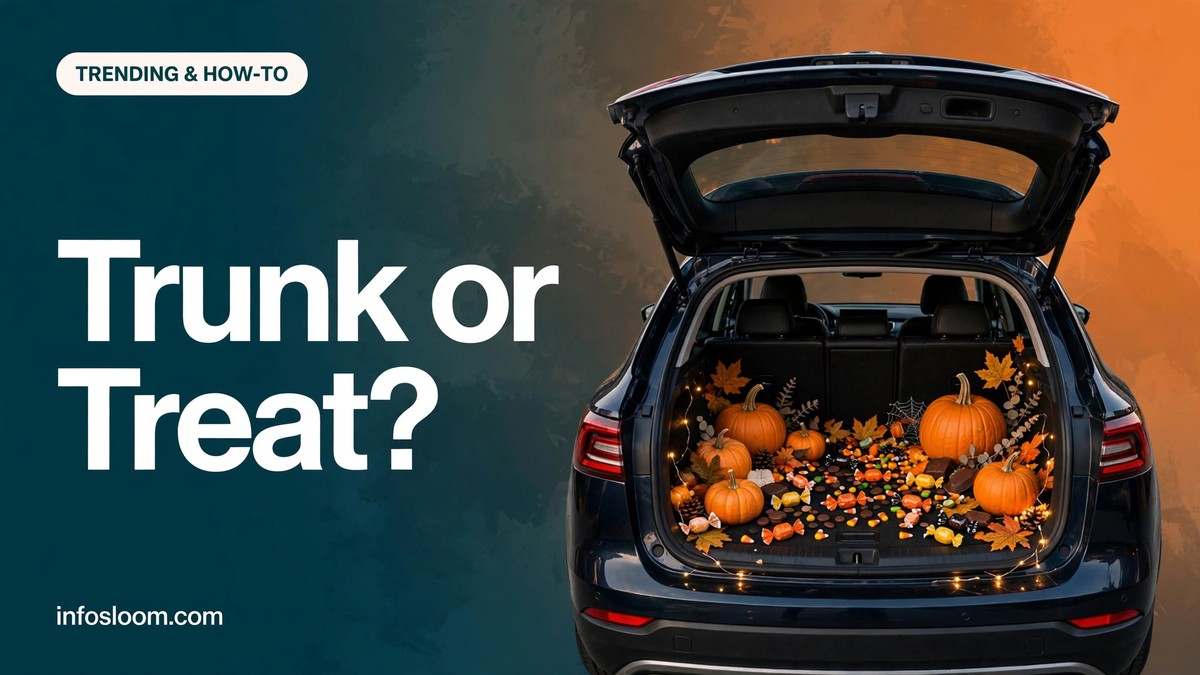
Trunk or Treat: Meaning, History, Rules, and Creative Ideas In 2026
Trunk or treat is a Halloween event where families decorate the trunks of their cars, park in a row, and hand out candy as children walk from car to car instead of door to door. Think of it as trick-or-treating condensed into one parking lot: costumes, decorated trunks, games, and treats, all within easy walking distance.
This guide explains what trunk or treat means, where it came from, the rules that make it run smoothly, and creative trunk ideas for 2026. Whether you are hosting, decorating a trunk, or taking kids for the first time, you will find everything you need here.
In this guide
- What trunk or treat is and how it works
- The history: from 1990s churches to a nationwide tradition
- Rules, safety tips, and trunk-or-treat etiquette
- Creative trunk ideas and themes for 2026
- At a glance: trunk or treat vs door-to-door trick-or-treating
- Frequently Asked Questions
What trunk or treat is and how it works
- 1. Cars replace houses as the treat stops, Instead of walking a neighbourhood, children walk a row of parked cars, stopping at each decorated trunk for candy or a small prize.
One parking lot can hold thirty treat stops, so even small children can visit them all before bedtime. - 2. The trunk is the decoration, Each car owner decorates their open trunk around a theme, from a pumpkin patch to a pirate ship, and hands out treats from behind it.
The open trunk acts as a little stage: backdrop, props, lights, and a candy bowl at the front edge. - 3. Events are hosted, not random, A church, school, business, or community group sets the date, books the lot, and invites families, so everyone knows when and where to show up.
Most events run two to three hours, usually starting around dusk so the lights and costumes show up best. - 4. It is built for families with young children, A flat, closed-off lot is easier for strollers and wheelchairs than dark streets, and parents can watch their kids the whole time.
Grandparents often come too: one lot, one walk, and a chair by the car beats miles of sidewalks. - 5. Games and contests are part of the fun, Many events add a costume parade, a best-decorated-trunk contest, games, music, and food alongside the candy.
A trunk contest turns decorators into friendly rivals, and the kids get to vote for their favourite.
The history: from 1990s churches to a nationwide tradition
- 1. It began in American churches in the early 1990s, Churches looking for a family-friendly fall festival began gathering cars in their lots as a gentler alternative to door-to-door trick-or-treating.
The earliest specifically reported church trunk or treat took place at Hilldale Baptist Church in Center Point, Alabama, in 1994. - 2. Safety worries helped it spread, Parents uneasy about strangers, traffic, and dark streets welcomed an event where every treat-giver was known and the whole route was visible.
Halloween night is one of the riskiest nights for child pedestrians, so a closed lot answered a real worry. - 3. The New York Times noticed it by 2006, National coverage in 2006 described trunk or treat as the answer for rural families whose neighbours lived too far apart for door-to-door visits.
Where houses sit half a mile apart, a parking lot full of trunks simply works better than a road full of porches. - 4. Schools, businesses, and towns joined in, By the 2010s, schools, malls, car dealerships, and neighbourhood groups were hosting their own versions, and decorating became a contest in itself.
Some dealership events are now among the largest in town, with dozens of themed trunks in a single lot. - 5. Today it is a fall staple across the United States, NPR revisited the phenomenon in 2023, and by 2025 trunk or treats were a fixture of the Halloween season in suburbs, small towns, and cities alike.
Millennial and Gen Z parents, who tend to favour supervised, structured activities, have helped the tradition keep growing.
Rules, safety tips, and trunk-or-treat etiquette
- 1. Arrive early and stay parked until the end, Decorators set up before families arrive, and cars should not move while children are walking the lot.
Hosts usually close the lot to traffic during the event, so plan to stay for the full two or three hours. - 2. Keep decorations car-safe and walkway-clear, Nothing should block the walking lane, drip paint on the car, or poke out where a child could trip over it.
Battery string lights beat extension cords every time, since most lots have no power outlets. - 3. Bring enough treats, plus a non-food option, Plan for the expected headcount, and add glow sticks, stickers, or small toys for children with food allergies.
A teal pumpkin on your trunk signals allergy-friendly, non-food treats under the Teal Pumpkin Project. - 4. Keep scares age-appropriate, Most trunk or treats are family events, so skip gore, jump scares, and loud sound effects that could frighten toddlers.
Friendly monsters, pumpkins, and cartoon themes win more votes than horror themes at family events. - 5. Children stay with an adult, and candy gets checked, Kids walk with a parent or guardian, and families check treats at home before eating, just as with traditional trick-or-treating.
Glow sticks or reflective tape on costumes help drivers and decorators spot children after dark.
Creative trunk ideas and themes for 2026
- 1. Pumpkin patch, Cover the trunk floor with orange fabric, add hay bales, pumpkins of every size, and a scarecrow for a classic harvest look.
Hand out mini pumpkins alongside candy and you will be the trunk kids remember. - 2. Under the sea, Blue fabric, bubble lights, paper fish, and a treasure chest turn a trunk into an ocean scene in under an hour.
A fishing net draped over the sides hides the car edges and sells the illusion instantly. - 3. Monster mouth, Build giant teeth from white cardboard around the trunk opening so children walk up to a friendly monster’s mouth for treats.
Paint the inside red, add googly eyes on top, and the trunk becomes the photo spot of the night. - 4. Outer space, Black fabric, glow-in-the-dark stars, a cardboard rocket, and an astronaut costume make a trunk that glows after dark.
Battery fairy lights are the secret here: they turn a dark trunk into a galaxy for a few dollars. - 5. Favourite movie or show, Pick a family favourite, from dinosaurs to superheroes, and dress the trunk and yourselves to match.
Matching costumes for the whole family earn bonus points in most trunk contests.
At a glance: trunk or treat vs door-to-door trick-or-treating
| Feature | Trunk or treat | Door-to-door trick-or-treating |
|---|---|---|
| Where | One parking lot | Neighbourhood streets |
| Distance walked | Short, flat, contained | Can be long, with traffic |
| Who gives treats | Registered decorators | Any house with lights on |
| Best for | Young children, strollers, groups | Older kids, classic experience |
| Extras | Contests, games, music, food | Decorated houses and porches |
Frequently Asked Questions
What is trunk or treat?
Trunk or treat is a Halloween event where decorated car trunks serve as treat stops in a parking lot. Children in costume walk from car to car collecting candy, instead of going door to door.
When did trunk or treat start?
It began in American churches in the early 1990s. The earliest specifically reported event was at Hilldale Baptist Church in Center Point, Alabama, in 1994, and it spread nationwide over the following decades.
Is trunk or treat safe for kids?
Generally yes: the lot is closed to traffic, treat-givers are registered, and parents walk with their children. Standard candy checks at home still apply, and costumes with glow sticks help visibility after dark.
What should I bring to a trunk or treat?
Kids need a costume, a treat bag or bucket, and something that glows. Decorators need a theme, battery lights, enough candy for the expected crowd, and non-food treats for children with allergies.
Do you have to belong to a church to join?
No. While churches started the tradition, most events today are open to the whole community, and schools, businesses, and towns host their own trunk or treats.
One lot, thirty trunks, and a whole neighbourhood of Halloween in a single evening.
Final Thoughts
Trunk or treat works because it keeps everything families love about Halloween, costumes, candy, and creativity, and removes the long, dark walk between houses. Pick a theme, light it well, bring allergy-friendly treats, and you will have a trunk kids talk about all year. Religion Unplugged traces how the church tradition grew into a nationwide fall staple. Planning more seasonal fun? Try the kids games collection, the naughty or nice list guide, or the smash or pass game explainer.
Leave a Reply